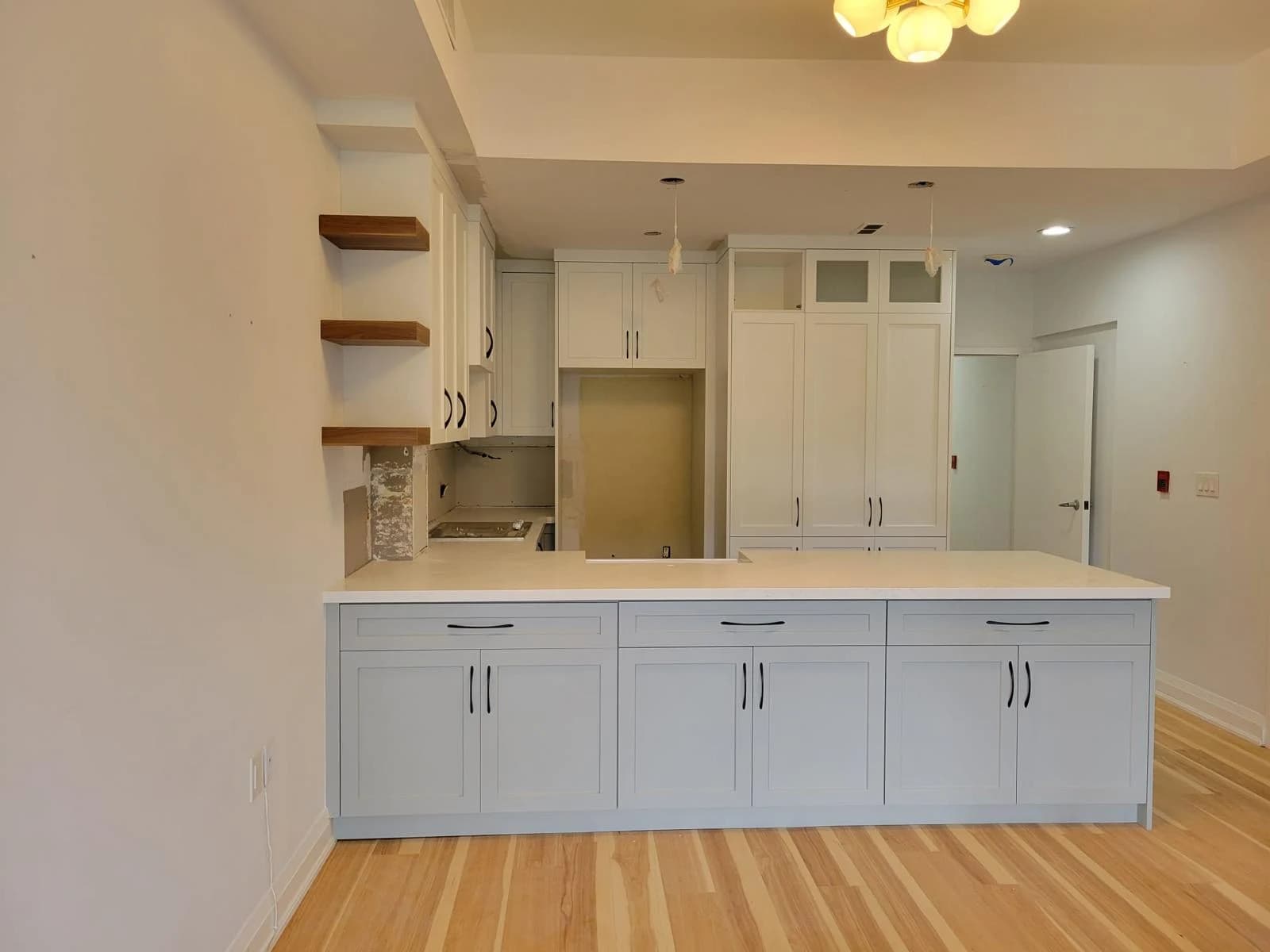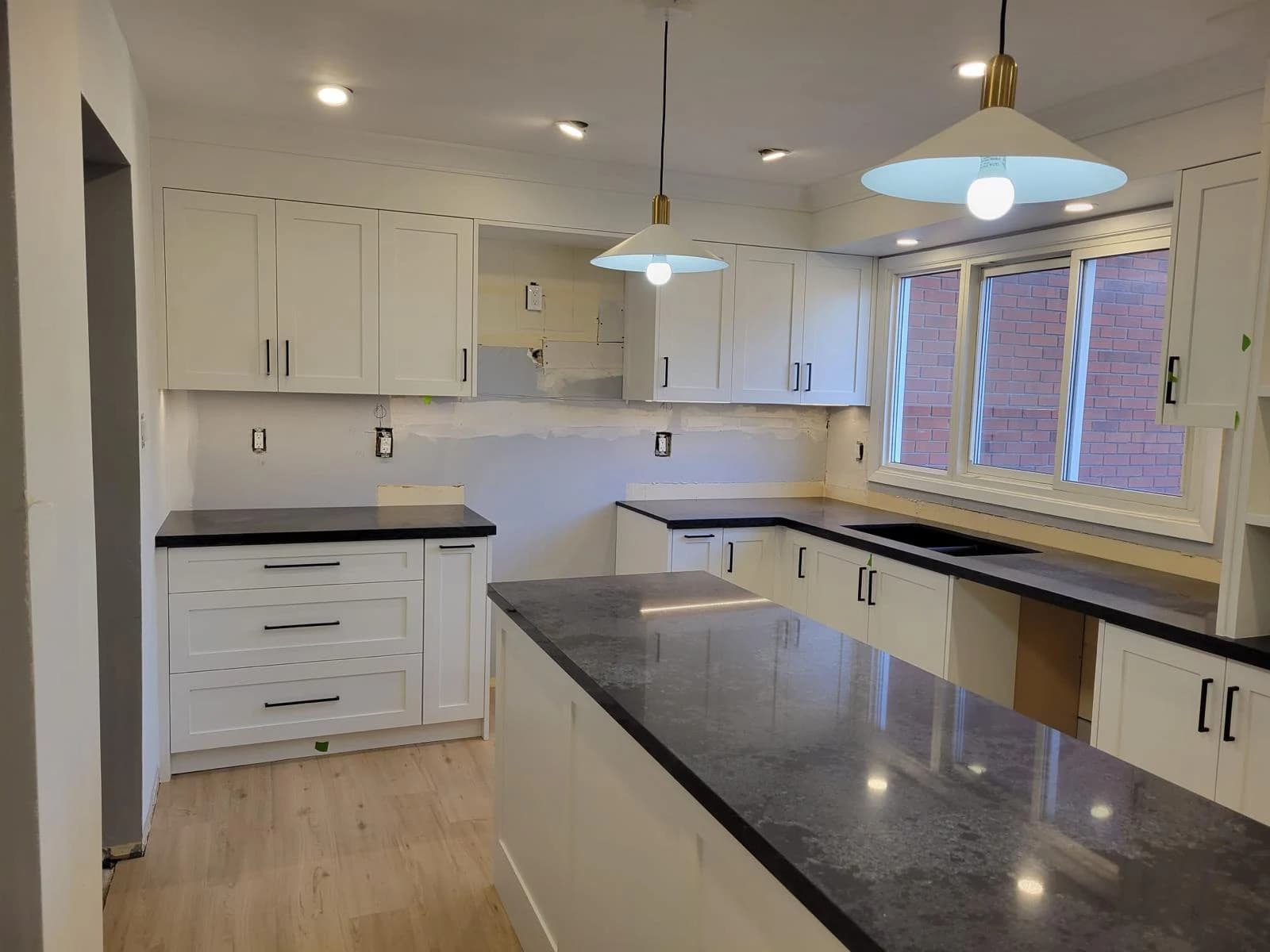
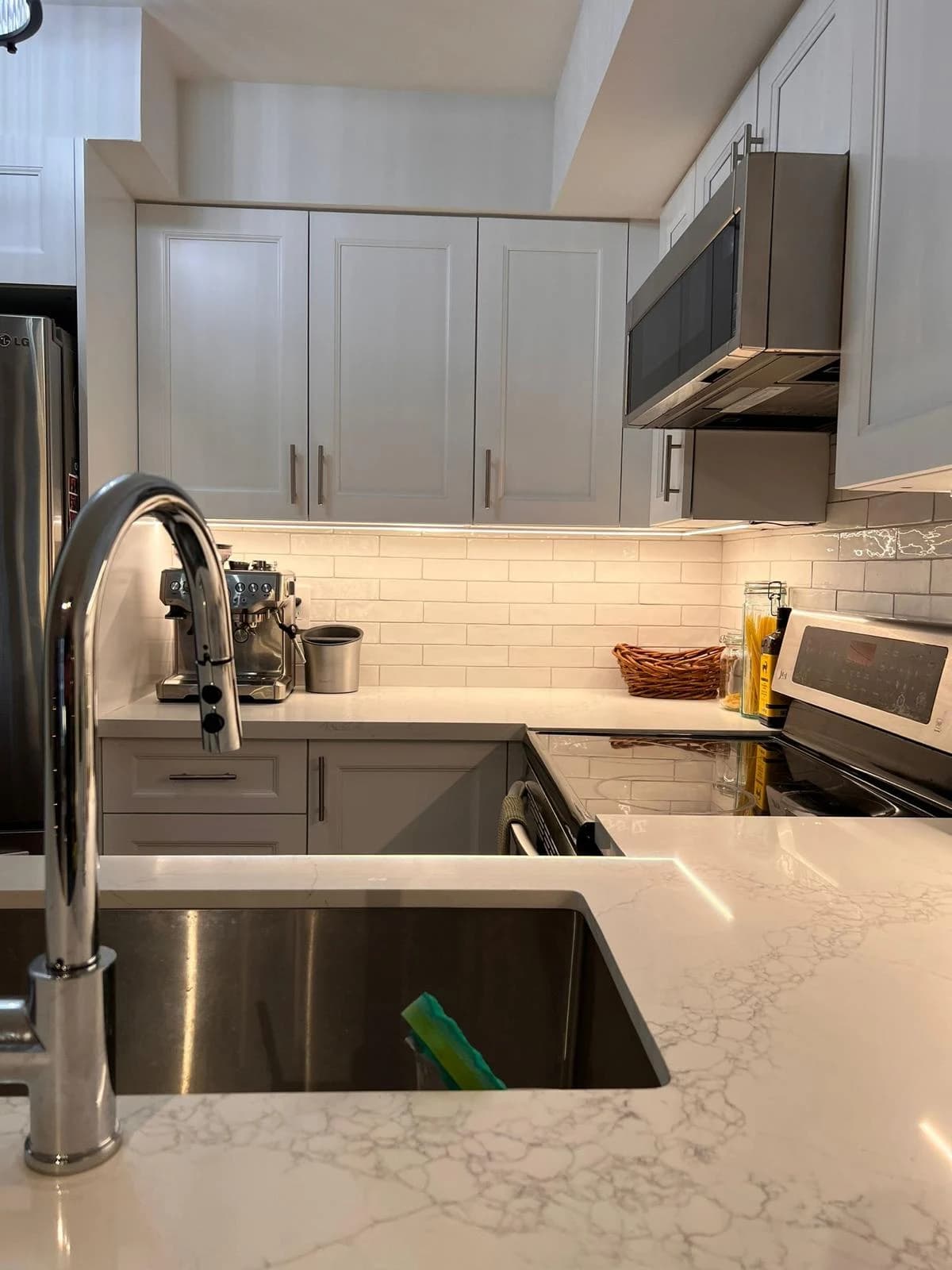
A kitchen with tired cabinet doors does not automatically need a complete replacement. Equally, a fresh finish will not resolve swollen panels or failing cabinet boxes. A useful assessment separates appearance, operation and underlying condition before comparing options.
Check the cabinet structure and the cause of damage first. Compare clearly defined repair and replacement scopes, including the work needed around the cabinets.
Look beyond the door fronts
Open each cabinet and inspect the visible panels, shelves and hardware. Record damaged areas and whether doors and drawers operate properly. A loose hinge, a damaged hinge mounting point and a distorted cabinet box may look similar from across the room but call for different work.
Give the sink area particular attention for visible damage or signs of an unresolved leak. Investigate the cause before approving cosmetic repairs. Do not cover suspect material merely to make the inside of the cabinet look finished; define any investigation or specialist work separately.
Separate serviceable parts from failed parts
Make a cabinet-by-cabinet list rather than marking the whole kitchen as either good or bad. Some doors may need adjustment, some hardware may be replaceable, and one box may require more extensive work. Record quantities so estimates can be compared on the same basis.
Ask whether matching parts are available. A repair can be technically possible yet leave a visible mismatch that the owner did not expect. Confirm the acceptable appearance and use a sample where a finish or replacement panel needs approval.
| Option to assess | Questions to resolve |
|---|---|
| Repair or adjust | Are the box and mounting points serviceable? Are parts available? |
| Refresh the finish | Is the existing surface suitable, and what preparation is included? |
| Replace selected components | Can sizes, finish and adjoining details be matched? |
| Replace the cabinetry | What connected work is required at the counter, walls and fixtures? |
Include the surrounding work in the comparison
Cabinet replacement may affect countertops, plumbing connections, backsplash edges, flooring transitions and wall repairs. Ask the contractor to identify those connections in the scope. A cabinet supply price alone is not a complete renovation price.
Retaining the layout can simplify some decisions, but it does not eliminate the need to verify dimensions and compatibility. If an appliance or sink is changing, provide the selected model information before finalizing the cabinets. Make exclusions visible so a lower figure is not mistaken for the same finished result.
Choose a scope that can be checked at handover
List the doors, drawers, panels and hardware included, along with the finish and any adjoining repairs. Keep optional work separate. Agree on how the kitchen should operate and look when the work is complete, including any accepted difference between old and new materials.
At handover, check the items that were repaired or replaced and record any remaining adjustment. Save product information and finish references for future maintenance. The best choice for a particular unit follows its condition, the approved scope and the owner’s priorities, rather than a blanket promise that one option is always cheaper.
Your planning checklist
- Inspect boxes, doors and hardware separately.
- Investigate the cause of visible damage.
- Confirm matching parts and finish expectations.
- Include connected countertop, fixture and wall work.
- Check the agreed scope at handover.